Sign up for Free Kaiko Research

Where Has the Volatility Gone? 

Welcome to the data blog

This week we recap a slow summer, examining volatility, liquidity, and volumes.

  • U.S. liquidity has not recovered since FTX’s collapse

  • Volatility continues to fall

  • New narratives are on the rise

This week, news broke that the oldest crypto market maker, GSR, has been scaling back operations – particularly in the U.S. – while a number of top executives have left the company. This is yet another hit to U.S. and global liquidity and volumes; in May, Jump Crypto and Jane Street revealed they were reducing crypto operations. This week, we’ll take a look at the state of the crypto market, including volatility, liquidity, and volumes, and then examine some budding narratives and tokens.

volatility

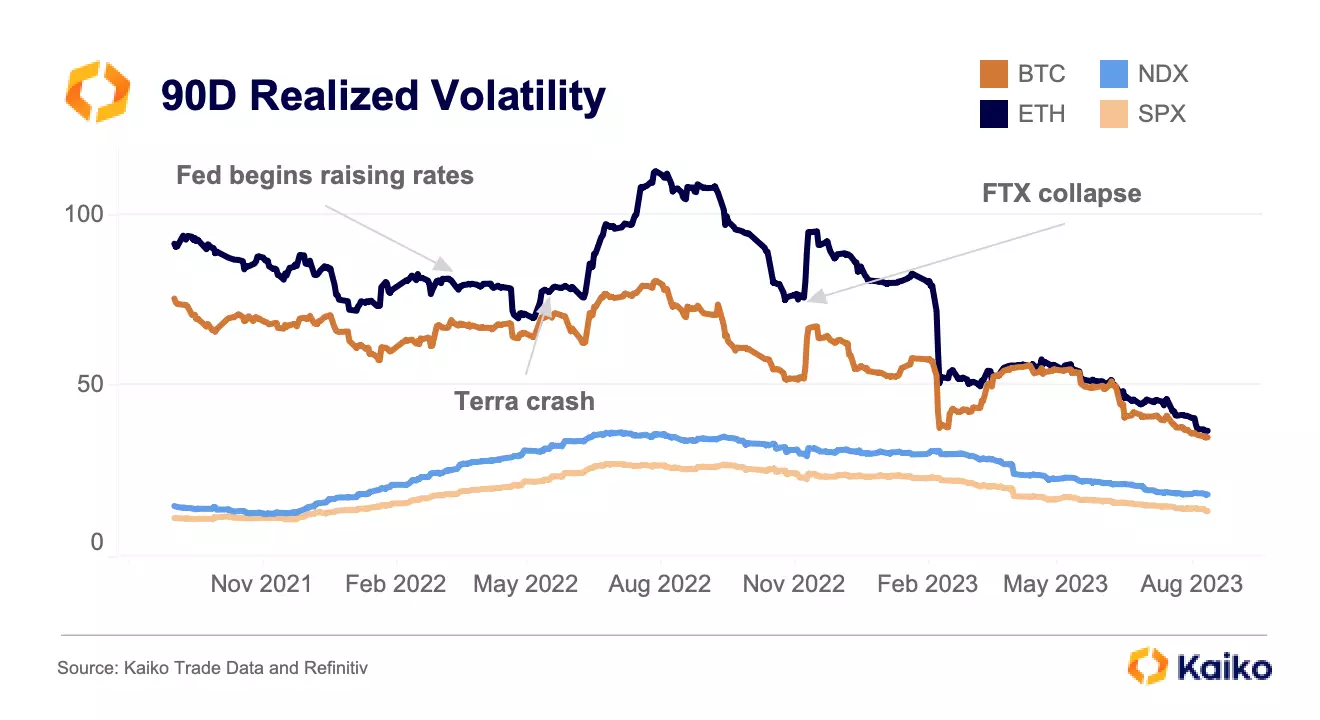
Crypto volatility has continued to slide in August as markets stagnate. However, when looking closer, volatility has been dropping consistently for about two years, punctuated by brief spikes related to the Terra and FTX collapses. What’s also notable is that the gap between BTC and ETH volatility is virtually non-existent.

Even the news in mid-June that BlackRock was applying for a spot BTC ETF, the potential acceptance of which is seen as a massive catalyst unlocking new demand, did little to increase volatility.

liquidity

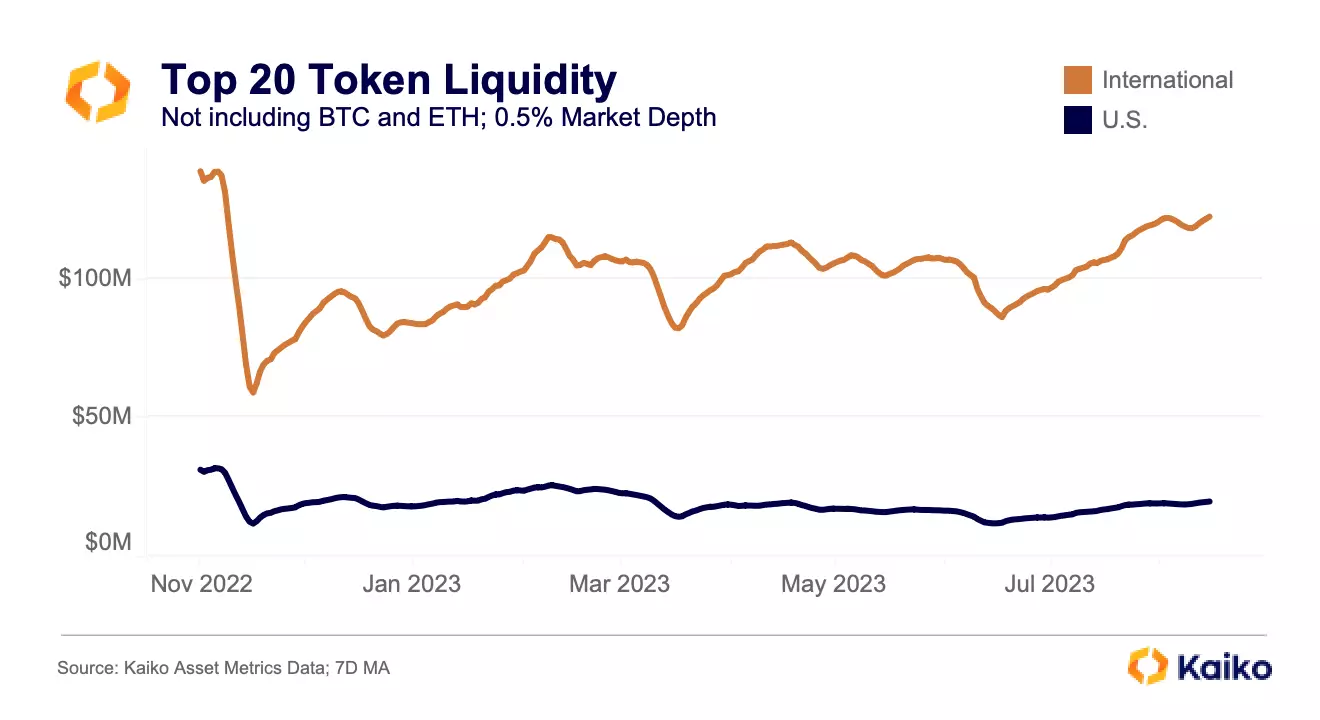
The U.S.’s liquidity woes triggered by the slowing down of major firms is clear in the data. The chart below shows the 0.5% market depth of the top 20 non-BTC, non-ETH tokens, beginning just before FTX collapsed.

Liquidity on international exchanges has surged from $70mn to $120mn, with a persistent upwards trend this summer, bringing it close to even with pre-FTX levels. Meanwhile, U.S. altcoin liquidity has struggled to recover, with a slight rally this spring interrupted by SEC lawsuits that alleged some of the tokens included were securities. It currently rests at $20mn, compared to $32mn in November 2022. 

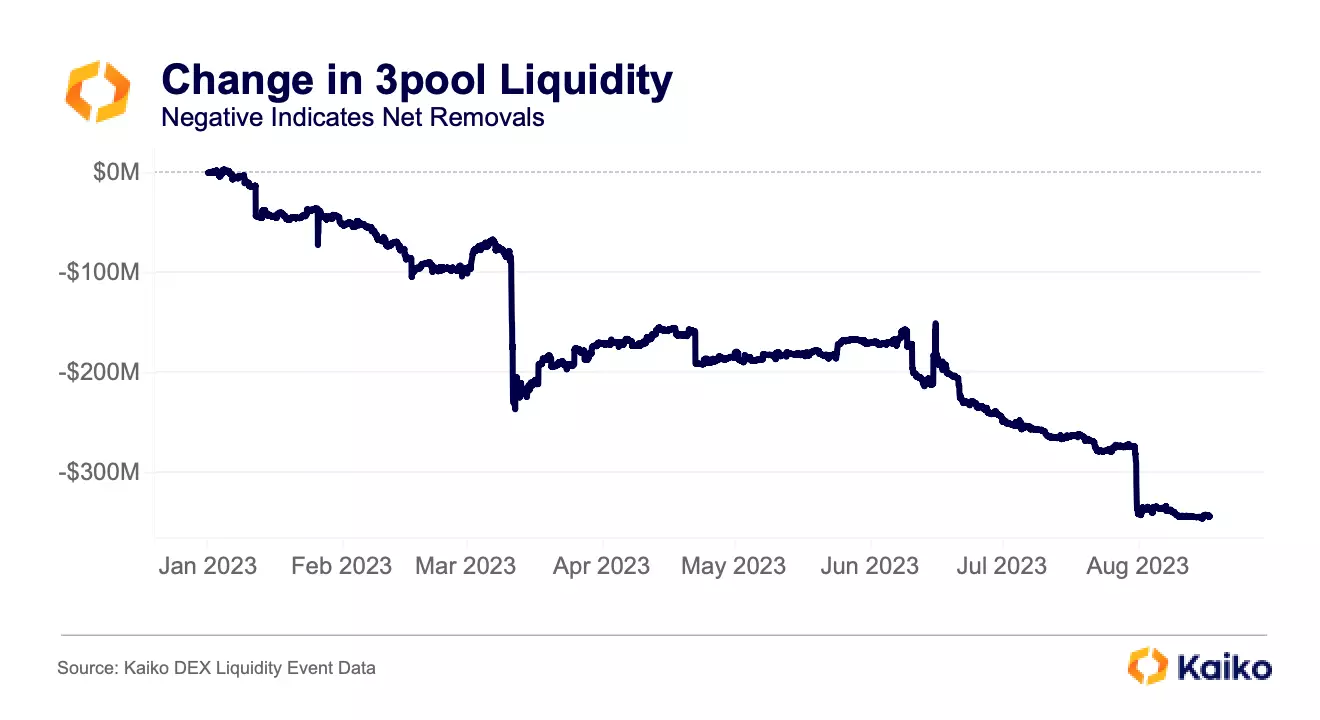
While CEX liquidity is a mixed picture, on-chain liquidity looks much worse. Traditional sources of liquidity – the 3pool, for example – have continued to lose liquidity as volumes (and thus fees) have dried up. The 3pool has lost nearly $350mn since the start of the year.

This is likely driven by both higher rates – there are many TradFi savings accounts offering better than 4% APY right now – and the fragmentation of liquidity as users search for higher returns. Some have branded the past few months as “Onchain Summer” and, while DeFi Summer in 2020 was characterized by an explosion in activity in Ethereum, this summer’s activity has been spread across many more networks. Solana is staging a comeback; Arbitrum hasn’t gone away; Optimism is buzzing, helped out by the Base launch. Liquidity and volume is bouncing around between networks chasing better returns.

Never miss an analysis.

Sign up for free for the Kaiko App.

Sign up

volume

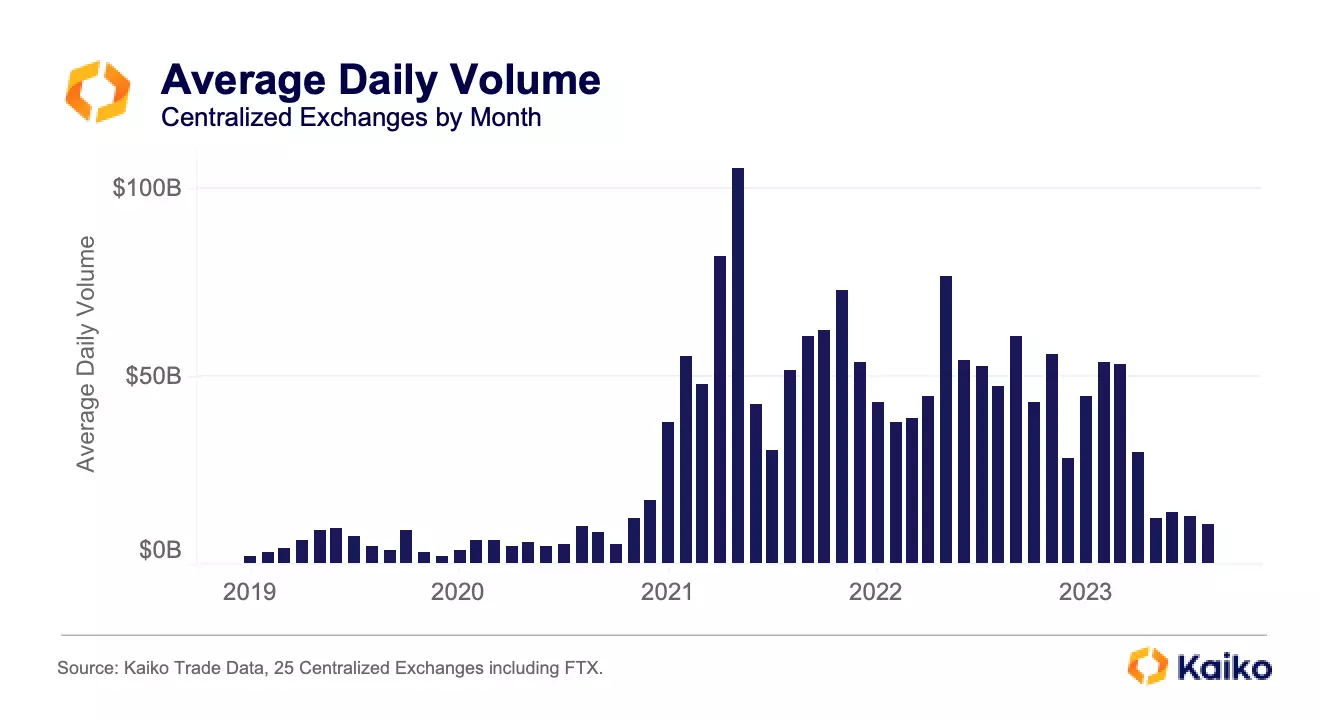
While liquidity has improved on international exchanges, spot volumes have suffered across the board. The last four months have had the lowest average daily volume since October 2020, when BTC was at $10k and ETH at $350. 

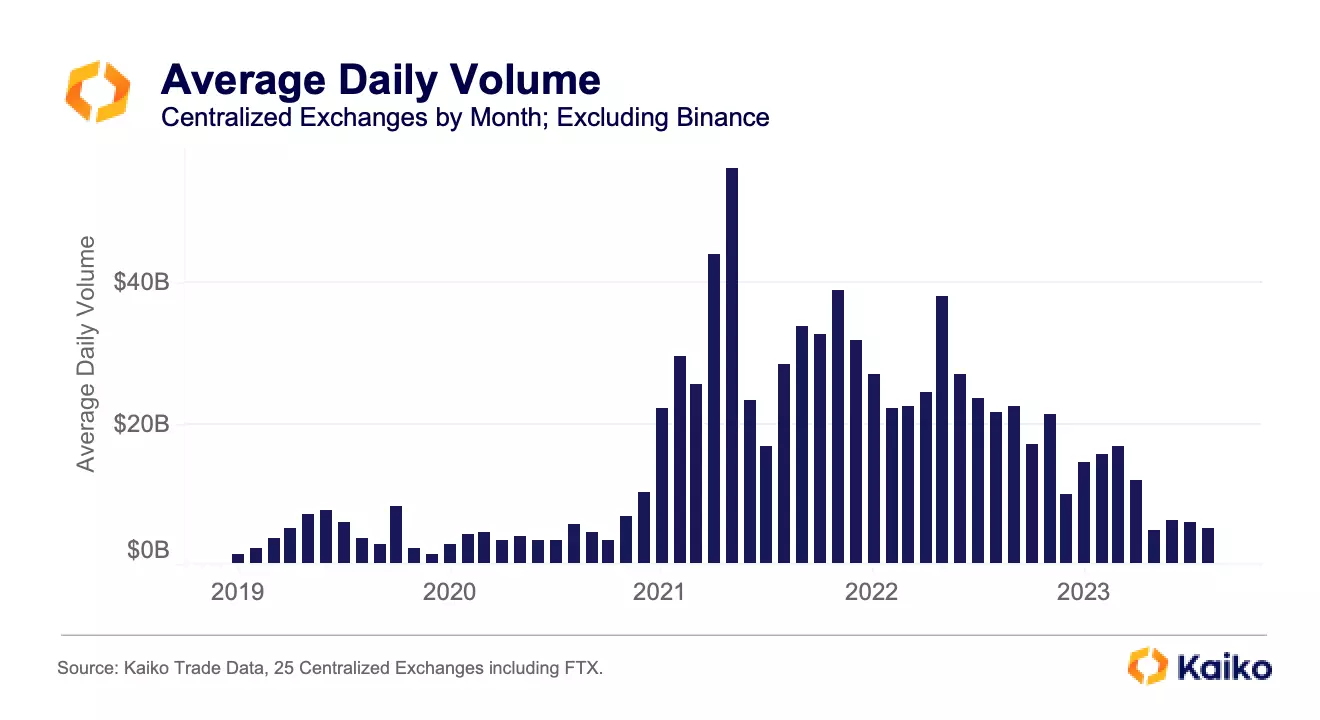
The drop from April to May 2023 appears precipitous above; however, when removing Binance and Binance.US to eliminate some of the noise associated with the exchanges’ zero-fee promotions, the last few months generally match the trend. Volumes have been falling steadily since the Terra collapse with the exception of the first three months of 2023, when crypto staged a brief but significant recovery.

Thus, it seems fair to say that these past few months aren’t the anomaly but rather an extension of the previous trend of dwindling volumes. 

what’s next

While all of this may seem gloomy, summer has historically been a slower time in crypto markets. The major tokens have been able to hold on to most of their gains from Q1 this year. There are also new narratives bubbling up, ones that seem to have more staying power than those that bounced around earlier this year (remember privacy-focused networks?). 

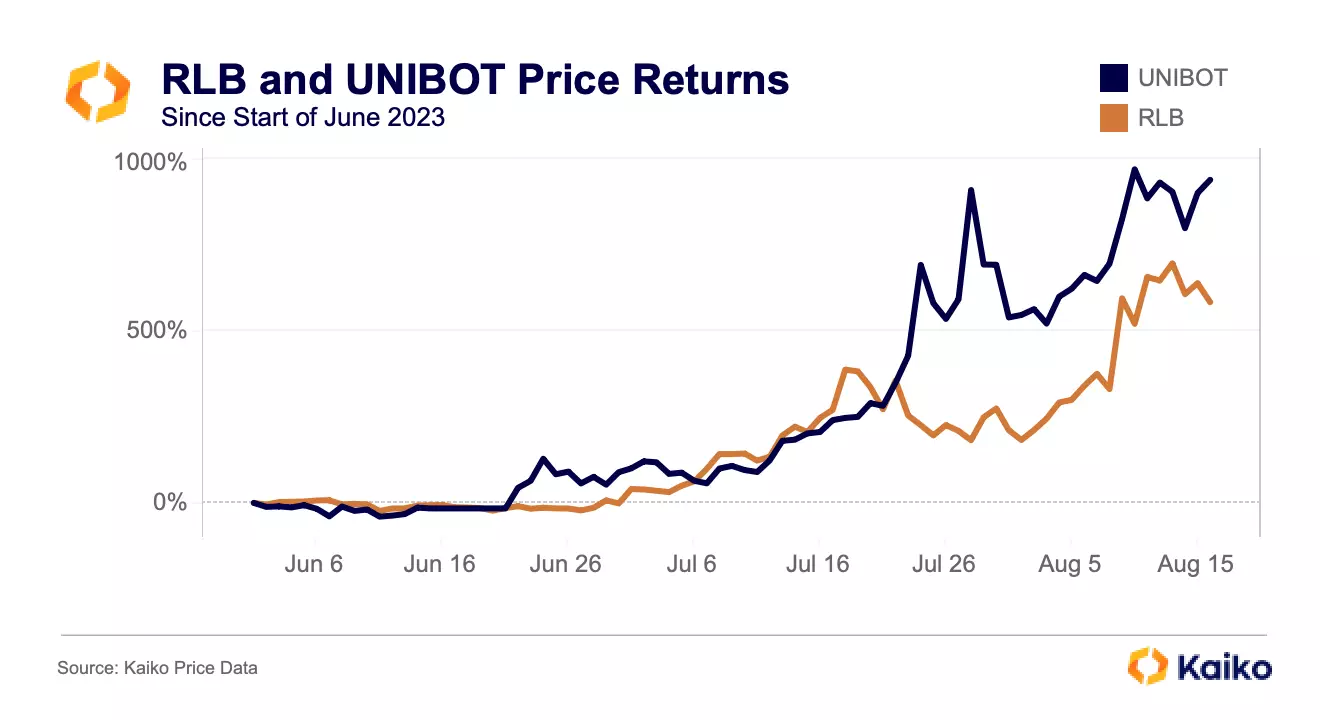
They have staying power because they’ve found true product-market fit. Rollbit (RLB) is a casino, sportsbook, and futures exchange all rolled into one. Setting potential regulatory issues aside, the fit here is obvious: speculation is probably the top use case for crypto at this point and Rollbit makes it easy. 

Unibot (UNIBOT), meanwhile, is a Telegram bot that allows users to place a variety of on-chain orders using Telegram commands. These include sniping (buying tokens as soon as they launch), copy trading, and limit orders. Again, it’s clear why the project has achieved such traction, as it allows less technical users to conduct more complex transactions while also making trading more mobile-friendly. However, there are concerns about the project’s protection of private keys.

As a result of their success, UNIBOT and RLB are up 950% and 575% since the start of June, respectively. They have also inspired numerous competitors, with a new and vast array of gambling and sportsbook protocols as well as Telegram and Discord trading bots. What remains to be seen is if these growing categories will kick start activity in the market as a whole; thus far their volumes have not been able to pull global average volumes higher.

Data Used In This Analysis

  • Asset Metrics

    Aggregated trade and order book data across all exchanges

  • Trade Data

    Tick-level transaction data from 100+ exchanges

More Data Blogs from kaiko

  • 07/05/2026

    Data Blogs
    Index in Focus: Inside Out Canton, Ecosystem & Coin

    21shares, one of the world’s leading issuers of crypto exchange-traded funds (ETFs), announced the launch of
    the 21shares Canton Network ETF (Ticker: TCAN). The fund is the first U.S. ETF designed to offer investors
    direct exposure to the Canton Coin (CC), the native utility token of the Canton Network.

  • 28/07/2025

    Data Blogs
    BTC Unfazed by Billion Dollar Sale

    It’s a big week ahead for macro news, with multiple central bank meetings, including the Fed, and a plethora of economic data to sift through. Moreover, crypto markets just absorbed a enormous $9bn BTC sale without much fuss. We explore all these topics and more in this week’s debrief.

  • 07/07/2025

    Data Blogs
    Gap Grows Between Bitcoin and Altcoins

    Bitcoin came close to a new all-time high last week before strong U.S. jobs data dented rate-cut hopes and pulled markets lower. Yet momentum remains intact, driven by institutional demand and a clear shift toward Bitcoin over altcoins. This week, we explored the structural shifts that may be laying the groundwork for a breakout.

  • 02/06/2025

    Data Blogs
    Trump’s Stablecoin On-chain Activity Surges Post-Binance Listing

    This week we explore World Liberty Financial’s stablecoin, USD1. The Trump family’s DeFi project launched the token over a month ago, and its seen significant uptake on-chain, however, off-chain activity has lagged. We also take a look at what crypto ETF applications are leading the approval race, how derivatives markets are maturing, and more.

  • 05/05/2025

    Data Blogs
    Bybit’s Liquidity Resilience Post-Hack

    Bybit’s liquidity rebounded within 30 days following one of the most severe shocks in crypto history. This report analyzes how key trading metrics evolved across Bitcoin and altcoins, highlighting improvements in market depth, spread stability, and trading volumes amid a broader risk-off environment.

  • 05/05/2025

    Data Blogs
    USDC Outpaces Rivals

    Bitcoin held near $95K on Monday as markets brace for this week’s Fed meeting. Last week’s U.S. data showed the economy losing steam despite solid job growth—Q1 GDP contracted as importers raced to stockpile goods ahead of tariffs, while consumer sentiment continued to slide. Meanwhile, Tether posted$1B in Q1 profits, and Arizona’s governor vetoed a bill that would have let the state hold Bitcoin.